Cold Email Subject Lines That Get Opened in 2026: A Tested Framework
Everything you spend on list building, copywriting, and sequencing runs through a single line of text that a buyer reads in about a second. If the subject line does not earn the open, none of the work behind it matters. The body could be perfect and the offer could be exactly right, and it still dies unread in a crowded inbox.
That is why the subject line is the highest-leverage sentence in your entire outbound program. A two-word change can move open rates by ten points, and open rate sits upstream of every reply, meeting, and deal that follows. Here is the framework we use at GroomLead to write subject lines that get opened in 2026, the patterns that still work, and the mistakes that quietly cost you half your pipeline.
Why subject lines decide the whole campaign
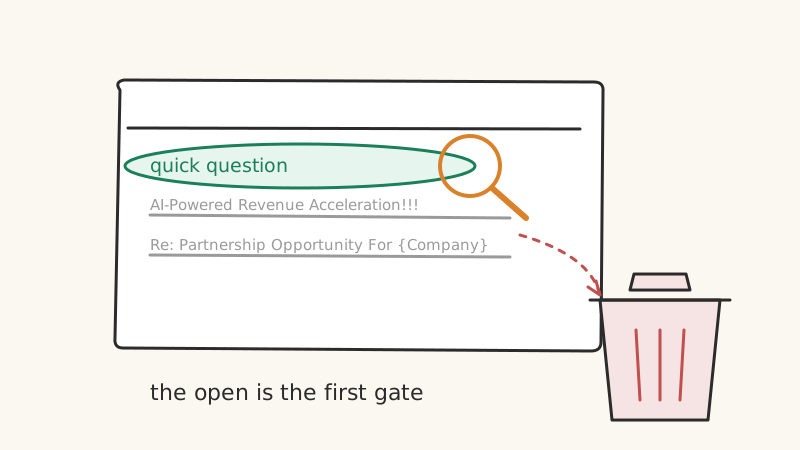
Cold outbound is a funnel, and the open is the first gate. If 20% of a list opens versus 40%, you have not lost 20 percentage points of opens. You have roughly halved every downstream number: replies, positive replies, and booked meetings all scale off that first gate. Two identical campaigns with different subject lines are really two different campaigns.
There is a second reason the subject line matters more in 2026 than it did a few years ago. Inboxes are smarter and buyers are faster to judge. A line that reads like a mass blast gets pattern-matched to spam in well under a second, and once a sender earns that reflex, later emails in the sequence inherit the suspicion. The subject line is not just a gate for one message. It sets the tone for the relationship.
The four patterns that still earn opens
After testing thousands of lines across outbound campaigns, the winners almost always fall into one of four patterns. None of them are clever. They work precisely because they look like an email a real colleague would send.
1. The short, lowercase, human line
Three to five words, often lowercase, written the way a busy person actually types on a phone. Examples: quick question, worth a look?, your team at {company}. These win because they do not look like marketing. They look like an internal note, so the reflex to delete never fires.
2. The specific-observation line
Reference something true and specific about the prospect or their company. saw {company} is hiring 3 SDRs or {competitor} comparison. Specificity signals that a human did research, which is the single strongest trust signal in a cold inbox. Generic flattery does the opposite.
3. The outcome or number line
Lead with the result the buyer wants, not your product. booking 30% more demos beats our AI SDR platform. Numbers stop the scroll because they promise something concrete, and a concrete promise is easier to evaluate than a vague claim.
4. The question that fits their week
A question the prospect is plausibly already asking themselves. is {topic} on your roadmap for Q4? or who owns outbound at {company}? A good question feels like it belongs in their inbox because it matches a decision they actually face.
The mistakes that kill open rates
The fastest way to improve is to stop doing the things that trigger the delete reflex. The most common ones:
- Writing a headline, not a subject. Title Case With Every Word Capitalized reads like an ad. Sentence case or lowercase reads like a person.
- Making a promise the body cannot keep. Clickbait spikes opens and then tanks replies and reputation. The subject must set up the body honestly.
- Stuffing the company name and a buzzword into one line.
{Company} + AI-Powered Revenue Accelerationis instantly recognizable as a template. - Using symbols and emojis to stand out. They stand out to spam filters too. Plain text almost always outperforms in B2B.
- Ignoring the preview text. The first line of the body shows next to the subject in most clients. Treat those two together as a single unit, because buyers read them together.
Personalization that scales without breaking
Specific lines win, but specificity does not scale if every line needs an hour of manual research. The practical answer is tiered personalization. Reserve fully custom, one-to-one lines for your top-tier accounts, and use a small set of tested templates with one real variable (a recent hire, a tool in their stack, a segment-specific pain) for the broader list. You get most of the lift of specificity at a fraction of the cost. If you want the deeper version of this tradeoff, our cold email personalization at scale playbook breaks it down by tier.
One point that gets missed: your clever subject line is wasted if the email never reaches the inbox in the first place. A sizeable chunk of a purchased or scraped list is stale, and sending to dead addresses drives bounces that drag down sender reputation, which in turn suppresses the opens you worked so hard to earn. Running the list through a validation tool like Scrubby before the campaign protects the deliverability that every subject-line test depends on. Clean list first, then optimize the line.
How to test subject lines the right way
Treat subject lines as an always-on experiment, not a one-time guess.
- Test one variable at a time. Compare two subject lines against the same body and audience, or you will not know what moved the number.
- Wait for a real sample. A line that wins on 40 sends is noise. Give each variant a few hundred sends before you call it.
- Judge on replies, not just opens. A line can win opens and lose meetings if it oversells. Track the full funnel through to booked calls.
- Retire winners on a schedule. The best line fatigues as your segment sees it repeatedly. Rotate a stable of three or four proven patterns.
When a subject line earns the open and the body earns the interest, the last gate is making it effortless to say yes. Sending a real calendar invite instead of asking the prospect to find a link removes the final point of friction, which is exactly what a tool like Kali is built for. The subject gets you read, the body gets you interest, and a frictionless booking step gets you the meeting.
The takeaway
In 2026, the subject lines that get opened are the ones that look least like marketing: short, specific, honest, and written like a human who did a little homework. Match one of the four proven patterns, kill the habits that trigger the delete reflex, protect your deliverability so the lines actually land, and test relentlessly on replies rather than vanity opens. The line is one sentence, but it decides the fate of the entire campaign behind it.
GroomLead runs this framework across managed outbound programs every day. If you want a team that treats the subject line as the growth lever it actually is, that is what we do.
Ready to engineer your own GTM system?
GroomLead builds the outbound infrastructure behind 100+ agencies, and the tools inside this post.
Book Strategy Call