Sales Meeting No-Shows in 2026: How to Cut Your No-Show Rate and Protect Booked Outbound Pipeline
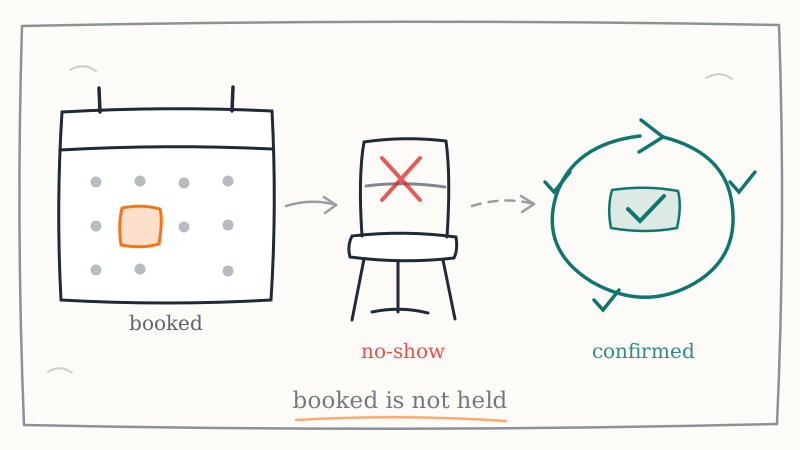
A sales meeting no-show is a prospect who accepted a meeting and then did not attend. Your no-show rate is the percentage of booked meetings that end in no attendance, and for most B2B outbound teams in 2026 it lands somewhere between 20 and 40 percent. That range matters more than almost any other number in your funnel, because a no-show is the most expensive kind of failure in outbound: you already paid for the data, the sending infrastructure, the sequence, the reply handling, and the rep’s calendar slot. Then nothing happened. This playbook covers how to measure the rate properly, the seven causes behind nearly every no-show, the confirmation sequence we run at GroomLead for the outbound programs we manage, and how to recover the meetings that still slip through.
How to calculate your sales meeting no-show rate
Most teams calculate this wrong, and the wrong version hides the problem.
The flawed version divides no-shows by total calendar events, which quietly includes internal syncs, rescheduled meetings that did happen, and meetings that were cancelled with notice. That inflates your denominator and makes the rate look better than it is.
Use this instead:
No-show rate = (meetings where the prospect did not attend and did not cancel in advance) / (total external meetings scheduled to occur) x 100
Two deliberate choices in that formula:
- Cancellations with notice are excluded from the numerator but stay in the denominator. A prospect who cancels 24 hours out behaved reasonably. That is a qualification or timing problem, not a no-show problem, and it needs a different fix.
- Reschedules that eventually happened count as attended. If you count every reschedule as a no-show you will over-engineer your confirmation process and under-invest in targeting.
Track the rate three ways, because the segment-level numbers are where the actual diagnosis lives:
- By source. Inbound demo requests, outbound cold email, cold call bookings, and referral meetings have radically different no-show profiles. Cold-booked meetings routinely no-show at two to three times the rate of inbound.
- By booking lead time. Meetings booked more than ten days out no-show far more often than meetings booked within three days.
- By seniority. VP and C-level prospects no-show more than directors and managers, because their calendars get overwritten by people with more authority than your rep.
If you only have one number, you cannot tell whether you have a targeting problem, a scheduling problem, or a confirmation problem. Those three require entirely different responses.
What a good no-show rate looks like in 2026
Benchmarks vary by motion, but these are the ranges we consider healthy:
| Meeting source | Healthy no-show rate | Red flag above |
|---|---|---|
| Inbound demo request | 10 to 15 percent | 25 percent |
| Referral or warm intro | 5 to 10 percent | 15 percent |
| Outbound cold email | 20 to 25 percent | 35 percent |
| Outbound cold call | 15 to 20 percent | 30 percent |
| Event or conference follow-up | 30 to 40 percent | 50 percent |
If your cold-email-sourced meetings no-show above 35 percent, the problem is almost never your reminder emails. It is upstream, in who you booked and how you booked them.
The seven root causes of sales meeting no-shows
1. You booked the wrong person
The single most common cause, and the hardest to see from a calendar report. A prospect who is curious but has no authority, no budget, and no active problem will accept a meeting to be polite and then skip it without guilt. This shows up as a cluster of no-shows from one title band or one company size.
It also shows up when your contact data is stale. If your list says someone is still the VP of Revenue Operations but they moved into a different function four months ago, they may accept out of confusion and then disengage. We enrich every record immediately before booking rather than relying on whatever a list provider captured months earlier. Triguna returns current role, company, and firmographic data from a LinkedIn profile or company identifier in a single API call, so the person on the invite is the person who actually owns the problem today.
2. The booking lead time was too long
A meeting booked 14 days out is competing with every urgent thing that will land on your prospect’s calendar over the next two weeks, and urgency wins. Our data across managed outbound programs is consistent: no-show rates roughly double past the ten-day mark.
Fix: constrain your offered slots. Instead of sending a generic scheduling link with four weeks of open availability, offer two or three specific slots inside the next five business days. If nothing works, offer a second narrow window rather than opening the whole calendar.
3. The value of the meeting was never specific
“Quick intro call to see if there is a fit” gives the prospect nothing to protect. When something else competes for that slot, there is no cost to dropping a vague meeting.
Fix: name the outcome in the invite body. “We will walk through how three companies in your segment cut SDR research time by 60 percent, and you will leave with the two plays that apply to your team whether or not you work with us.” That is a thing worth keeping.
4. The invite itself is weak or missing
An astonishing number of outbound meetings are booked in an email thread and never turned into an actual calendar event with a working join link. If the meeting lives only in a reply, it does not exist.
Fix: every booked meeting gets a real calendar invite within 15 minutes, with a working video link, a clear agenda in the body, and the right attendees. If a prospect is bringing colleagues, get their addresses on the invite too.
5. Nobody confirmed
The gap between booking and meeting is where intent decays. With no touch in between, a prospect who was warm on Tuesday is indifferent by Friday.
This is also the easiest cause to fix, and the full sequence is below.
6. The champion left or changed roles
If your meeting was booked by someone who then changed jobs or got reorganized, the meeting dies silently. At scale this is a meaningful slice of no-shows, and it is also an opportunity: the person who left is now a warm contact at a new account. We track job changes across our customer and prospect base with Champions, which flags when a known contact moves so the meeting can be reassigned internally and the departing contact can be re-approached at their new company.
7. Your reps are booking for volume, not for fit
If an SDR is compensated purely on meetings booked, you have paid them to book no-shows. The incentive guarantees it.
Fix: compensate on meetings held and meetings accepted by AE, not meetings booked. This one change often moves no-show rate more than every tactical fix combined.
The confirmation sequence that actually works
Here is the sequence we run between booking and meeting. The design principle: every touch asks for a small, explicit confirmation rather than just broadcasting a reminder.
Immediately on booking (within 15 minutes)
Send the calendar invite plus a short confirmation email. Three jobs: confirm the slot in writing, state the agenda in two lines, and ask one question the prospect can answer in a sentence. That reply is the point. A prospect who has replied once after booking is substantially more likely to show.
“Thanks for the time on Thursday at 10. Invite is in your inbox. So I can make the 25 minutes useful, what is the single biggest bottleneck in your outbound right now: list building, deliverability, or reply handling?”
Two days before (for meetings booked more than four days out)
Send one piece of real value tied to their stated problem. Not “just circling back.” A relevant teardown, a short benchmark, a one-page example from their segment. This re-establishes that the meeting has content behind it.
Keep the asset to one page and put it in the body of the email rather than behind an attachment the prospect will not open on a phone.
One day before
A short confirmation asking for an explicit yes or no. The goal is a reply, not a reminder.
“Still good for 10am tomorrow? A yes or a reschedule link both work for me.”
A no here is a win. A reschedule 20 hours out costs you nothing. A silent no-show costs you the slot.
Morning of, 90 minutes prior
One line with the join link. No pitch, no new information, no attachments.
“Here is the link for 10am: [link]. See you shortly.”
Ten minutes after start, if they have not joined
Do not leave the meeting. Send a text or LinkedIn message, then a short email offering two specific alternative slots. Prospects who no-show and get an immediate, gracious rebooking offer convert at a far higher rate than prospects who get a passive-aggressive “sorry we missed you” three days later.
Across the programs we run, teams that implement this five-touch sequence consistently take 10 to 15 percentage points off their no-show rate within a quarter. The two highest-leverage touches are the first (because it earns a reply) and the one-day-before explicit confirmation ask.
Automating the sequence without sounding automated
The sequence above is five touches per booked meeting across email, LinkedIn, and sometimes SMS. At 40 booked meetings a month that is 200 touches your reps should not be assembling by hand, and the ones they forget are exactly the meetings that no-show.
This is the layer to automate, and it splits into two jobs: sending the touches, and handling what comes back.
For the outbound side, an AI SDR layer like VSDR can run the confirmation touches across email and LinkedIn off the booking event, personalizing each one against the account context and the prospect’s stated problem from the original reply thread, at a volume a rep managing 40 live meetings cannot sustain by hand.
The return side matters more, and it is where most teams leak meetings. The whole design above is built to provoke replies, which means replies arrive: reschedule requests, “can I bring our RevOps lead,” questions that need a real answer. A confirmation reply that sits unread for six hours is a no-show you created yourself. We run Underfive.ai across our sending accounts for exactly this, bringing every inbox into one view where AI inbox agents classify the incoming reply, draft a context-aware response in under five minutes, and hand off to a human the moment the prospect asks something that deserves one. Speed on the reply is what converts a wobbling meeting into a held one.
How to recover a no-show
Treat a no-show as a deferred meeting, not a dead lead. The recovery playbook:
- Reach out within 10 minutes, while the slot is still live in their mind. Short, no guilt, two concrete alternative times.
- Switch channel. If the booking came from email, use LinkedIn or phone for the recovery touch. The channel change signals effort without signaling desperation.
- Give them an easy out. “If the timing is wrong, tell me and I will follow up next quarter instead” gets honest answers and keeps the relationship intact.
- Recover twice, then stop. Two recovery attempts, then move the contact back into a nurture sequence with a 60 to 90 day delay. Chasing a third time trains your reps to spend their day on the least responsive prospects they have.
- Log the reason. Every recovered no-show should capture a cause code: wrong person, bad timing, forgot, internal conflict, no longer relevant. After 50 of these you will know exactly which of the seven root causes is actually yours.
That last step is the one teams skip, and it is the one that compounds. A no-show rate is a symptom. Cause codes are the diagnosis.
One thing that makes the recover-or-nurture decision in step 4 much less of a coin flip: knowing whether the account is still in-market at all. A prospect who no-showed because this quarter’s priorities moved looks identical, from your calendar, to one who simply forgot. A buying-signal feed tells them apart. We watch target accounts in CAM, which pulls job changes, social conversations, competitor connections, and website activity into a single feed, so a no-showed account that is still visiting your pricing page gets a second recovery attempt while one that has gone quiet across every signal goes to nurture without burning more rep time.
A 30-day plan to cut your no-show rate
Week 1: measure properly. Implement the formula above. Segment by source, lead time, and seniority. Stop reporting a single blended number.
Week 2: fix the structural causes. Constrain booking lead times to five business days. Mandate a real calendar invite with an agenda within 15 minutes of every booking. Change SDR comp from meetings booked to meetings held.
Week 3: deploy the confirmation sequence. All five touches, with the reply-earning question on touch one and the explicit yes-or-no ask the day before.
Week 4: instrument recovery. Ten-minute recovery touch, channel switch, two attempts maximum, cause code logged on every single one.
Re-measure at day 30 and day 90. If your segmented rates have not moved, the problem is upstream in targeting, and you should be rebuilding your ideal customer profile rather than rewriting reminder copy.
Frequently asked questions
What is a good sales meeting no-show rate? For outbound cold-email-sourced meetings, 20 to 25 percent is healthy in 2026. Inbound demo requests should sit at 10 to 15 percent. Anything above 35 percent on outbound signals a targeting or qualification problem rather than a reminder problem.
Do reminder emails actually reduce no-shows? Passive reminders help modestly. Confirmation touches that require a reply help substantially more. The mechanism is commitment, not information: a prospect who has affirmed the meeting in writing after booking it is meaningfully more likely to attend.
Should I use a scheduling link or offer specific times? Offer two or three specific slots inside the next five business days. Open-ended scheduling links invite long booking lead times, and long lead times are one of the strongest predictors of a no-show.
How many times should I try to rebook a no-show? Twice, then move them to a 60 to 90 day nurture. Beyond two attempts the return per touch drops below what the same rep time is worth on fresh accounts.
Does paying SDRs on meetings held really change behavior? Yes, and it is usually the highest-impact single change available. Compensating on meetings booked pays reps to book anyone who says yes. Compensating on meetings held and AE-accepted aligns the SDR with the outcome you actually want.
Cutting your no-show rate is not a copywriting exercise. It is a systems problem spread across targeting, data freshness, scheduling mechanics, confirmation cadence, incentives, and monitoring. Fix the structural causes first, automate the confirmation sequence second, and instrument recovery third. If you would rather have that system run for you than build it, GroomLead operates the full outbound motion, from list to booked and held meeting, as a managed program.
Ready to engineer your own GTM system?
GroomLead engineers outbound systems for B2B teams, and builds the tools inside this post.
Book Strategy Call