Cold Calling Scripts for B2B Outbound in 2026: Openers, Objection Handling, and Frameworks That Book Meetings
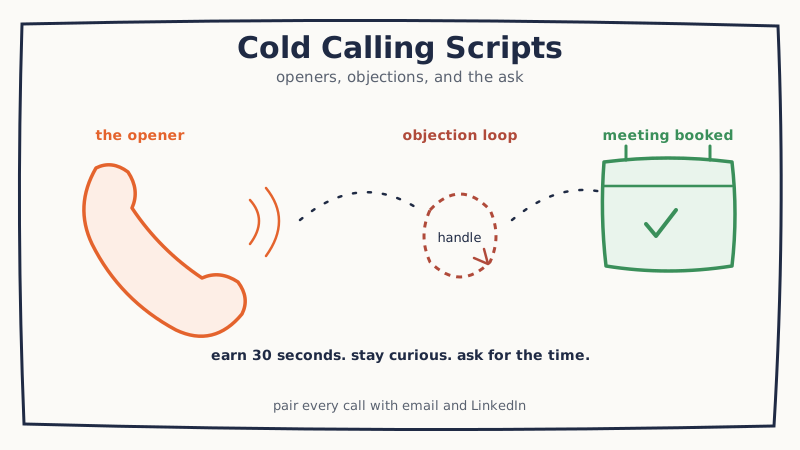
A cold calling script is a structured, repeatable outline for a B2B phone conversation with a prospect who did not ask for the call. It is not a word-for-word monologue you read like a telemarketer. It is a framework of openers, questions, and objection responses that keeps the rep in control, sounds human, and moves toward one goal: a booked meeting. In 2026, when buyers are drowning in automated email and generic LinkedIn requests, a well-run cold call is one of the few channels where a real conversation still cuts through. The scripts below are the ones we use and coach at GroomLead for the outbound programs we run.
Why cold calling still works in 2026
Every year someone declares cold calling dead, and every year the teams that pick up the phone keep booking meetings their competitors miss. The reason is simple. As email volume explodes and inboxes get more aggressive filtering, the phone has become a relatively quiet channel. A prospect who ignores your third email will often answer a direct, respectful question when they hear a live human ask it.
The catch is that the phone is unforgiving. You get about eight to ten seconds to earn the next thirty. A vague, rambling, or robotic opener gets you hung up on. A sharp, confident, permission-based opener earns you a real conversation. That is why a script matters. Not to make you sound scripted, but to make sure your best openings and your best objection responses are ready before your brain has to improvise under pressure.
The anatomy of a cold call
Every effective cold call moves through five phases. Your script should have language ready for each.
- The opener. Earn the right to keep talking.
- The reason for the call. State a specific, relevant reason you are calling this person.
- The discovery question. Get them talking about a problem you solve.
- The pitch and the ask. Connect their problem to your value and ask for the meeting.
- Objection handling. Respond to the pushback that almost always comes.
Miss a phase and the call stalls. Rush a phase and you sound like every other rep. Let us build each one.
The opener: earn the next thirty seconds
The opener is the single highest-leverage line in the entire call. Most reps waste it with a fake-friendly “How are you today?” that instantly signals a sales pitch. Instead, be direct and honest. Prospects respect a rep who respects their time.
A permission-based opener that consistently works:
“Hi Sarah, this is Alex from GroomLead. I know I am an interruption, so I will be quick. Can I take thirty seconds to tell you why I called, and then you can tell me to get lost?”
That last line does real work. It is honest, it is a little disarming, and it hands control back to the prospect, which lowers their guard. Roughly seven or eight out of ten people say “sure, go ahead.” Now you have earned the next thirty seconds.
An alternative pattern-interrupt opener for warmer or more senior contacts:
“Hi Sarah, this is Alex from GroomLead. This is a cold call. Would you like to hang up, or give me twenty seconds first?”
Naming the cold call directly is unexpected, and the honesty buys you attention.
The reason for the call: be specific
Once you have permission, do not launch into a feature dump. Give one specific, relevant reason you called this person at this company. This is where research pays off.
“I called because you are running outbound with a small SDR team, and most teams your size are leaving pipeline on the table because reps spend more time building lists than actually selling. I wanted to see if that is true for you too.”
The reason should reference something real about their world: their role, their company stage, a trigger event, a hiring signal. Generic reasons get generic brush-offs. This is why the data behind the call matters as much as the words. Before a rep ever dials, we enrich each record so the opener references the prospect’s current role and company, not a stale title from a list bought six months ago. Triguna returns structured, current firmographic and contact data from a LinkedIn profile or company identifier in a single API call, so the reason you give on the phone is actually true today.
The discovery question: make them talk
The rep who talks the most loses. After the reason, ask one open question that invites the prospect to describe a problem.
“How are you handling prospecting research right now, is that something a rep does manually or do you have it systematized?”
Then stop talking. Let the silence do the work. Whatever they say next tells you whether there is a real problem and gives you the exact language to mirror back in your pitch.
The pitch and the ask: connect and close for the meeting
Keep the pitch to two sentences. You are not selling the product on this call. You are selling the next fifteen minutes.
“That is exactly what we fix. We build and run the outbound system so your reps stop doing list work and spend their time on live conversations. Worth a quick fifteen minutes next week to see if it maps to your setup?”
Then propose a specific time. Do not ask “when works for you?” Offer a concrete slot: “Does Thursday at 10 work, or is Friday morning better?” A specific ask gets a specific answer.
Objection handling: expect the pushback
Almost every good call includes an objection. That is not failure, it is engagement. Have a calm response ready for the four you will hear most.
- “I am not interested.” “Totally fair, you have not heard enough to be interested yet. Most people I call feel that way until they realize their reps are spending half their week on list building. Can I ask one quick question before I let you go?”
- “Send me an email.” “Happy to. So I send something actually useful and not another ignored email, what is the one thing about your outbound you would fix if you could? I will build the email around that.” This turns a brush-off into discovery.
- “We already have a solution for that.” “That makes sense, most teams your size do. Out of curiosity, is it getting you the meeting volume you want, or is it just okay?” The word “just okay” opens a lot of doors.
- “I do not have time right now.” “Completely understand, I called out of the blue. Would tomorrow morning or afternoon be better for a quick fifteen minutes?” Never fight for time on the spot, book the specific slot instead.
The point of scripting objections is not to win an argument. It is to stay calm and curious when a rep’s instinct is to get defensive or give up.
Voicemail: the script for the eighty percent who do not pick up
Most dials go to voicemail, so treat the voicemail as its own tiny script. Keep it under twenty seconds, give a reason, and set up the follow-up email so the two channels work together.
“Hi Sarah, this is Alex from GroomLead, my number is 555-0100. I called about how your SDR team is spending its time on prospecting research. I will follow up with a short email so you have the details. Again, Alex at GroomLead, 555-0100. Thanks Sarah.”
Say your name and number twice, slowly. Then send the email you promised within the hour, referencing the voicemail. The one-two of voicemail plus email lifts response far more than either alone.
Cold calling does not work alone: pair it with email and LinkedIn
A call is one touch in a multichannel sequence, not a standalone act. The prospect who ignores your voicemail may reply to the email that references it, and the one who declines on the phone may accept a LinkedIn connection the next day. The channels reinforce each other. For the full cadence structure, see our guide to building an outbound multichannel sequence, which lays out how to time calls, emails, and social touches across a two to three week window.
The hard part is running that cadence at volume without dropping touches or losing track of who is at which step. That is a systems problem, not a willpower problem. A tool like VSDR deploys an AI sales development rep that researches each prospect and handles the personalized email and social touches at a controlled, human cadence, which frees your human reps to spend their hours where they matter most: live on the phone, having the conversations a machine cannot have. And when a call or voicemail generates an inbound reply, Underfive.ai categorizes and drafts the response within minutes, so a hot prospect never sits waiting while the intent cools.
A cold calling script checklist
- Open with a permission-based or honest pattern-interrupt line, never “how are you today?”
- Give one specific, researched reason for calling this exact person.
- Ask a single open discovery question, then stop talking.
- Keep the pitch to two sentences and ask for a specific meeting slot.
- Prepare calm, curious responses to the four most common objections.
- Use a tight twenty-second voicemail script and pair it with an immediate email.
- Run every call inside a multichannel cadence, not as a one-off dial.
A script does not make a rep robotic. It frees the rep to be human, because the structure is already handled and their attention can go to the person on the other end. The teams that win at cold calling in 2026 are not the ones with the smoothest pitch. They are the ones who show up prepared, respect the prospect’s time, and pair the phone with the rest of a disciplined outbound system. If you would rather have that system built, staffed, and run for you, that is exactly what GroomLead does for its clients every day.
Ready to engineer your own GTM system?
GroomLead builds the outbound infrastructure behind 100+ agencies, and the tools inside this post.
Book Strategy Call